Strategic Timing of Offers: How Multiplier Promotions Align with Major Events to Boost Accumulator Bets
Written by Theo Günther · May 22, 2026
Strategic Timing of Offers: How Multiplier Promotions Align with Major Events to Boost Accumulator Bets
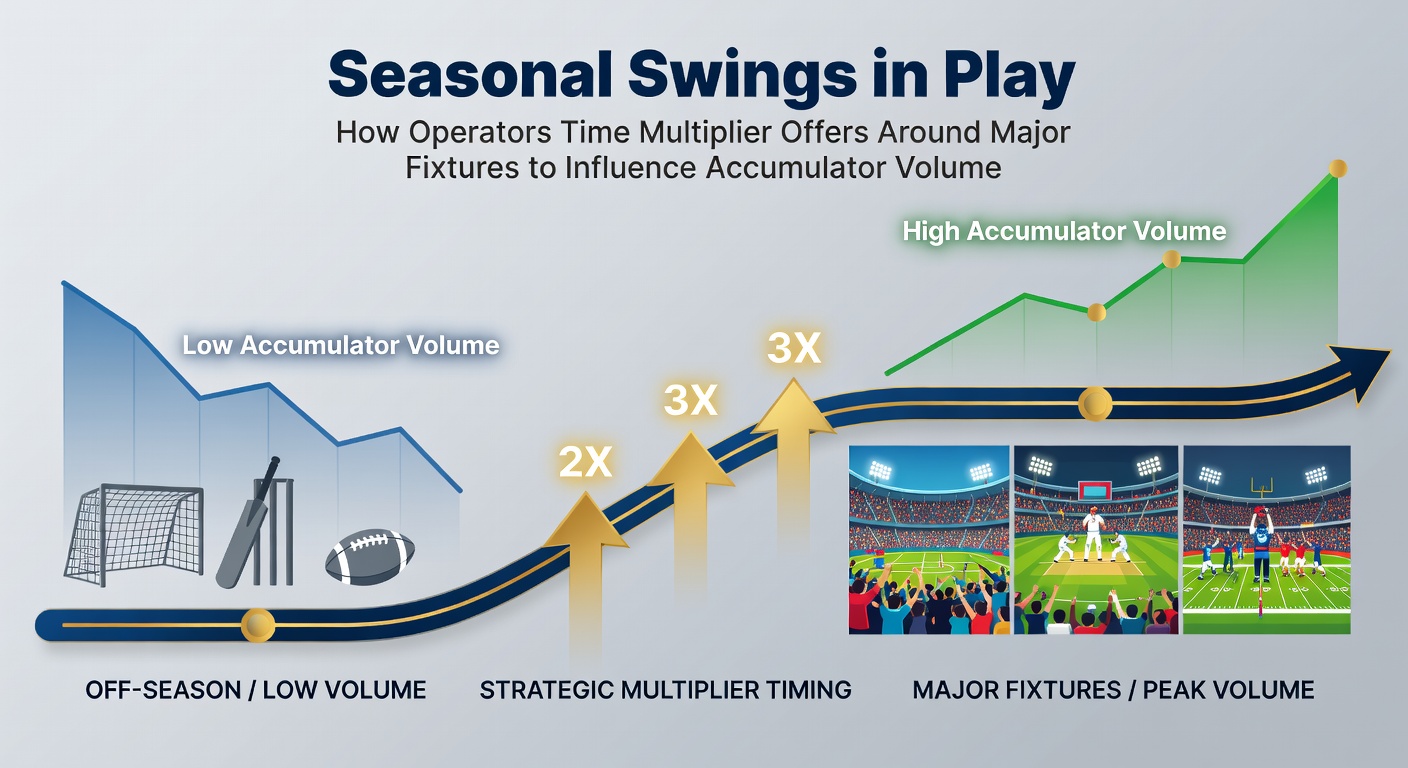
Betting operators coordinate multiplier offers with major sporting fixtures to shape accumulator activity throughout the year, and this approach draws on predictable patterns in fan engagement and betting volumes. Major events such as league title deciders, international tournaments, and championship finals create natural spikes in interest, which companies leverage by introducing temporary boosts that multiply potential returns on multi-leg bets. These timed incentives encourage bettors to combine selections across several matches, increasing both the number of legs and the overall stake committed to accumulators.
Core Mechanics of Multiplier Promotions
Multiplier promotions function by applying a percentage uplift or fixed multiplier to the odds of qualifying accumulators, often requiring a minimum number of selections from specific leagues or events. Operators calculate the enhanced odds in advance so that the promotion aligns precisely with fixture schedules, and they promote these offers through app notifications, email campaigns, and targeted advertising in the days leading up to key matches. Data from industry analyses shows that accumulator volume can rise by 30 to 50 percent during these windows, because the boosted returns offset the inherent risk of multi-leg wagers while still preserving the operator's margin across the broader book.
Seasonal Patterns and Fixture Clustering
Fixture calendars dictate the rhythm of these promotions, with clusters of high-profile games occurring during domestic title run-ins, cup semi-finals, and international breaks. Operators monitor historical betting data to identify when accumulator participation peaks, then release multiplier offers that coincide with those periods rather than spreading them evenly across quieter months. In practice this means heavier promotion activity around December holiday fixtures, March European nights, and the final weeks of the season, whereas summer months without major football see fewer such campaigns. Observers note that this clustering maximizes the impact of limited marketing budgets while responding directly to surges in customer logins and deposit activity.
What's interesting is how operators adjust the minimum leg requirements or eligible competitions depending on the fixture type, ensuring that the promotion feels tailored rather than generic. During a major international tournament, for example, multipliers might apply only to bets that include at least one match from the event, which funnels activity toward the most popular games and away from lower-profile leagues.
Influence on Accumulator Volume and Player Behavior
Research conducted by academic teams at institutions such as the University of Las Vegas Center for Gaming Research indicates that multiplier offers produce measurable lifts in both the frequency and average stake size of accumulator bets. Bettors who normally place single-match wagers often add extra legs when a multiplier appears, because the enhanced payout makes the added risk appear more attractive. Operators track these shifts through real-time analytics dashboards, allowing them to fine-tune offer parameters mid-campaign if volume exceeds or falls short of internal targets.
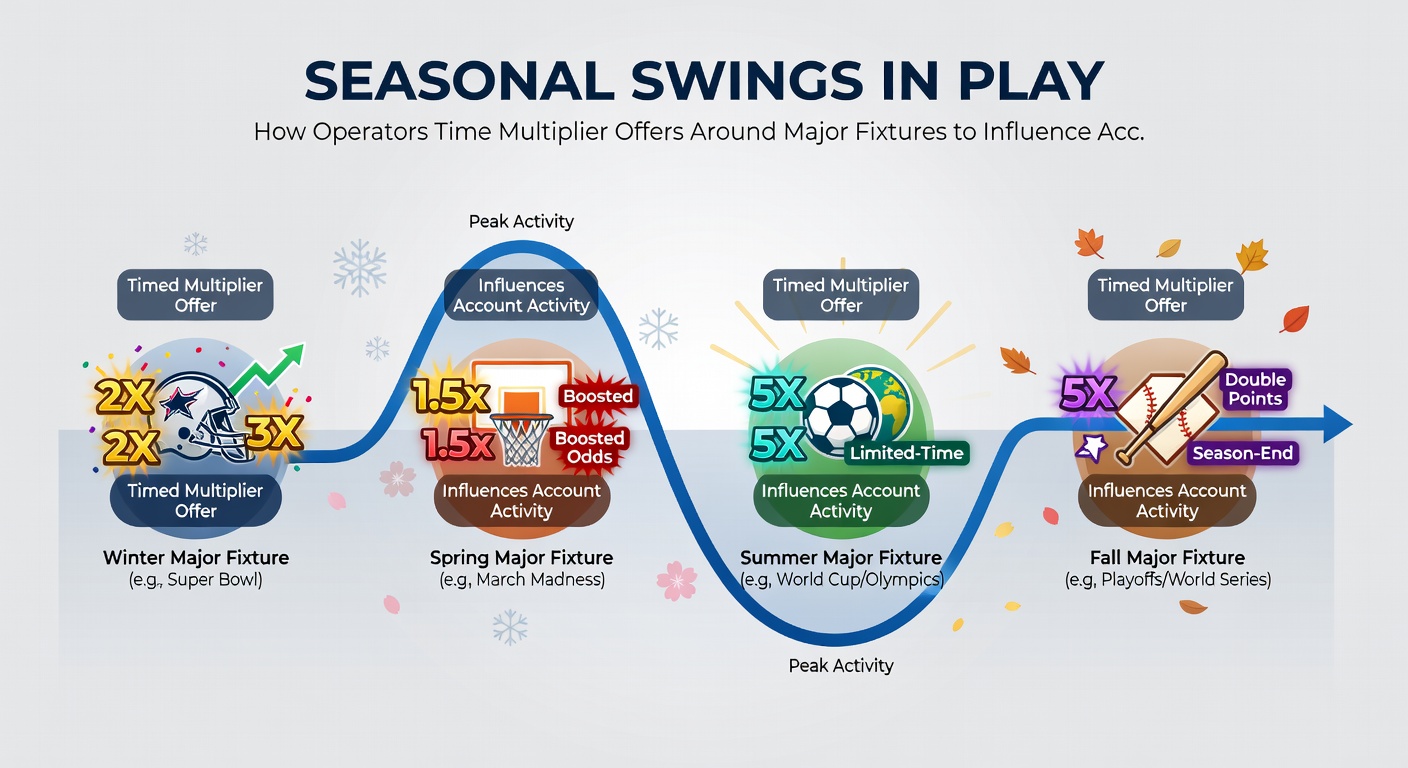
During the approach to May 2026, when several European leagues reach their decisive stages, operators are expected to intensify multiplier campaigns once again. Historical patterns suggest that the final month of the season generates the highest accumulator engagement of the year, driven by title races, relegation battles, and simultaneous cup competitions. Companies therefore prepare larger marketing allocations and more generous multipliers to capture a greater share of that concentrated betting interest.
Regulatory and Industry Context
According to reports published by the European Gaming and Betting Association, operators must balance promotional timing with compliance obligations that vary by jurisdiction. Some markets impose caps on the size of odds boosts or require clear disclosure of the true probability adjustments behind multiplier offers. These rules shape how aggressively companies can promote accumulators around major fixtures without triggering additional scrutiny. Industry organizations continue to publish guidance that helps members align seasonal promotion calendars with evolving regulatory expectations across different regions.
Take one operator that adjusted its multiplier structure ahead of a high-stakes Champions League week. The firm introduced a sliding scale that rewarded longer accumulators with progressively higher multipliers, resulting in a documented increase in four-leg and five-leg bets while maintaining overall profitability. Similar tactics appear across the sector whenever fixture congestion creates opportunities for elevated engagement.
Conclusion
The coordination of multiplier offers with major fixtures represents a deliberate operational strategy that operators refine each season. By aligning promotional windows with predictable spikes in interest, companies influence the volume and structure of accumulator bets in measurable ways. Continued monitoring of fixture calendars, customer data, and regulatory developments allows these tactics to evolve while remaining within established industry frameworks. As new seasons unfold, including the period leading into May 2026, observers can expect further refinements in how timing, multiplier size, and eligible selections are managed to sustain accumulator activity.