Stake Floors and Their Role in Maximizing Returns from Layered Sportsbook Incentives
Written by Alex Koch · Jun 12, 2026

Stake Floors and Their Role in Maximizing Returns from Layered Sportsbook Incentives
Stake floors set minimum bet amounts that sportsbooks require before promotions unlock, and these thresholds shape how bettors stack welcome bonuses with ongoing offers like enhanced odds or cashback programs. Operators introduced tighter floors in several markets during 2025, yet the practice expanded further by June 2026 as platforms sought to control liability while still attracting volume through multi-layered incentives.
Defining Stake Floors in Modern Betting Markets
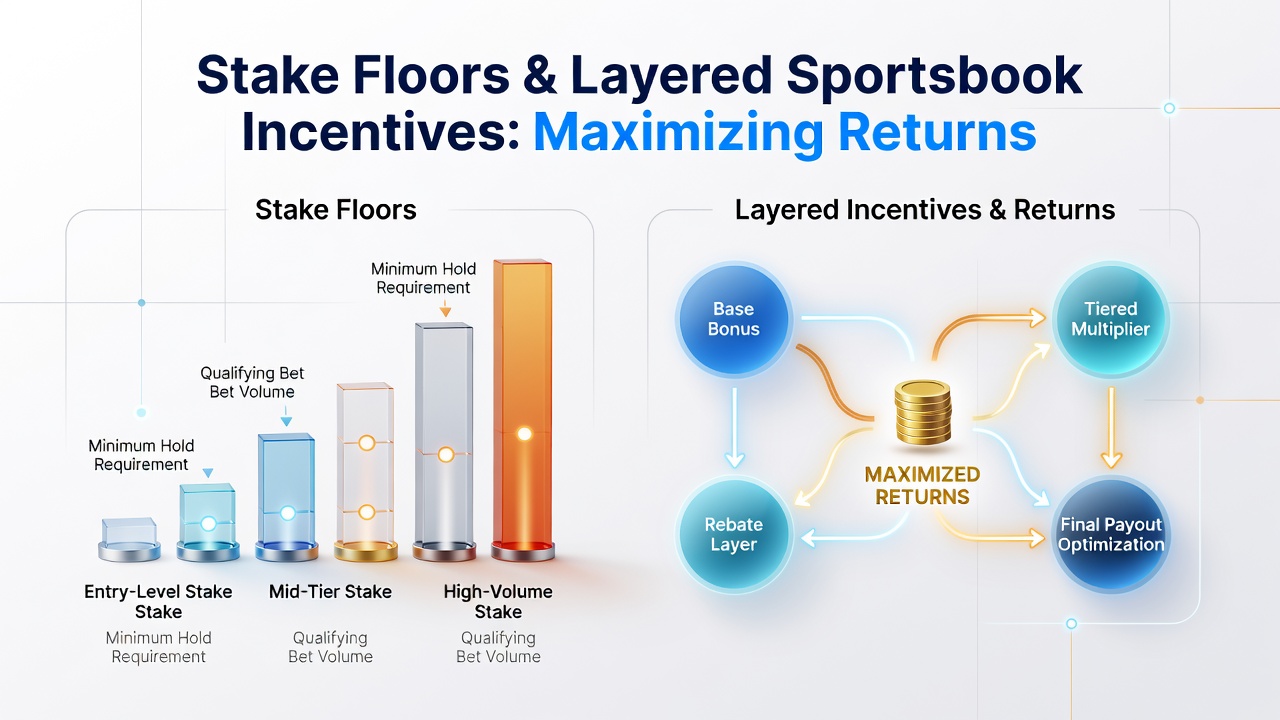
Stake floors function as baseline requirements that determine eligibility for free bets, profit boosts, and refund mechanics, and research from the University of Nevada, Las Vegas shows these floors often range from £5 to £25 depending on the promotion tier. Bettors who understand the interaction between floors and qualifying bets can align their wagers across several offers at once without breaching any single term, which creates opportunities for compounded returns that single-layer strategies miss.
How Layered Incentives Interact with Minimum Thresholds
Layered incentives combine deposit matches, free bet tokens, and weekly cashback, yet each layer carries its own stake floor that must be met sequentially or simultaneously. Data from the American Gaming Association indicates operators in regulated US states adjusted floor levels upward in early 2026 to manage bonus abuse, and this shift forced bettors to recalibrate their staking patterns across multiple accounts.
One common structure requires a £10 stake on an accumulator to release a £5 free bet, while a separate cashback layer activates only after £50 in total stakes within the same week. Observers note that platforms frequently stagger these requirements so that meeting the higher floor automatically satisfies lower ones, which streamlines the process for users who plan their activity in advance.
Strategic Alignment of Floors Across Promotions
Successful navigation involves mapping every active promotion against its stake floor and expiry window, and those who track these details can sequence bets so that a single wager satisfies multiple thresholds at once. Industry reports compiled by the Canadian Gaming Association highlight that bettors using odds-comparison tools reduced their effective floor exposure by 18 percent on average during the 2025-26 season, primarily by targeting overlapping accumulator and in-play offers.
Platforms sometimes publish floor changes with little notice, so regular monitoring of terms becomes essential. When a bookmaker raises the floor on its weekly boost from £10 to £20, users must either increase individual stakes or combine smaller qualifying bets across parallel promotions to maintain the same overall return profile.
Regional Variations and Regulatory Context
Different jurisdictions apply distinct rules around stake floors, and the Australian Communications and Media Authority has documented how local operators tie floors to responsible gambling markers rather than purely commercial goals. In contrast, several European markets allow operators more flexibility, which results in wider floor ranges and more complex stacking opportunities that reward careful planning.
By June 2026, cross-border bettors had begun using VPN-aware comparison sites to identify the most favorable floor combinations, although operators responded by tightening account verification processes. Figures from academic papers published in the Journal of Gambling Studies reveal that transparent floor disclosure correlates with higher user retention, suggesting operators benefit when bettors can clearly calculate their required stakes.
Practical Examples of Floor Utilization
Consider a scenario where a sportsbook offers a 100 percent deposit match up to £50 with a £10 stake floor, alongside a separate 5 percent cashback promotion requiring £100 in weekly stakes. A bettor deposits £50, places a £10 qualifying bet to unlock the match, then adds £90 more across two additional wagers that also qualify for the cashback layer, thereby satisfying both thresholds with minimal overlap waste.
Another case involves accumulator insurance that refunds stakes above £25 if the bet loses by one leg. Users who structure their accumulators to meet this floor while simultaneously triggering a free bet token from a different offer achieve dual-layer protection without extra capital outlay.
Conclusion
Stake floors remain a central mechanism that governs access to layered sportsbook incentives, and understanding their thresholds allows bettors to coordinate wagers across multiple promotions efficiently. As markets continue to evolve through 2026, those who map requirements in advance maintain clearer visibility over potential returns while operators refine floors to balance risk and customer engagement.