Matched Betting Mechanics: How UK Punters Lock in Profits from Bookie Free Bets
Written by Gisela Lehmann · Mar 16, 2026
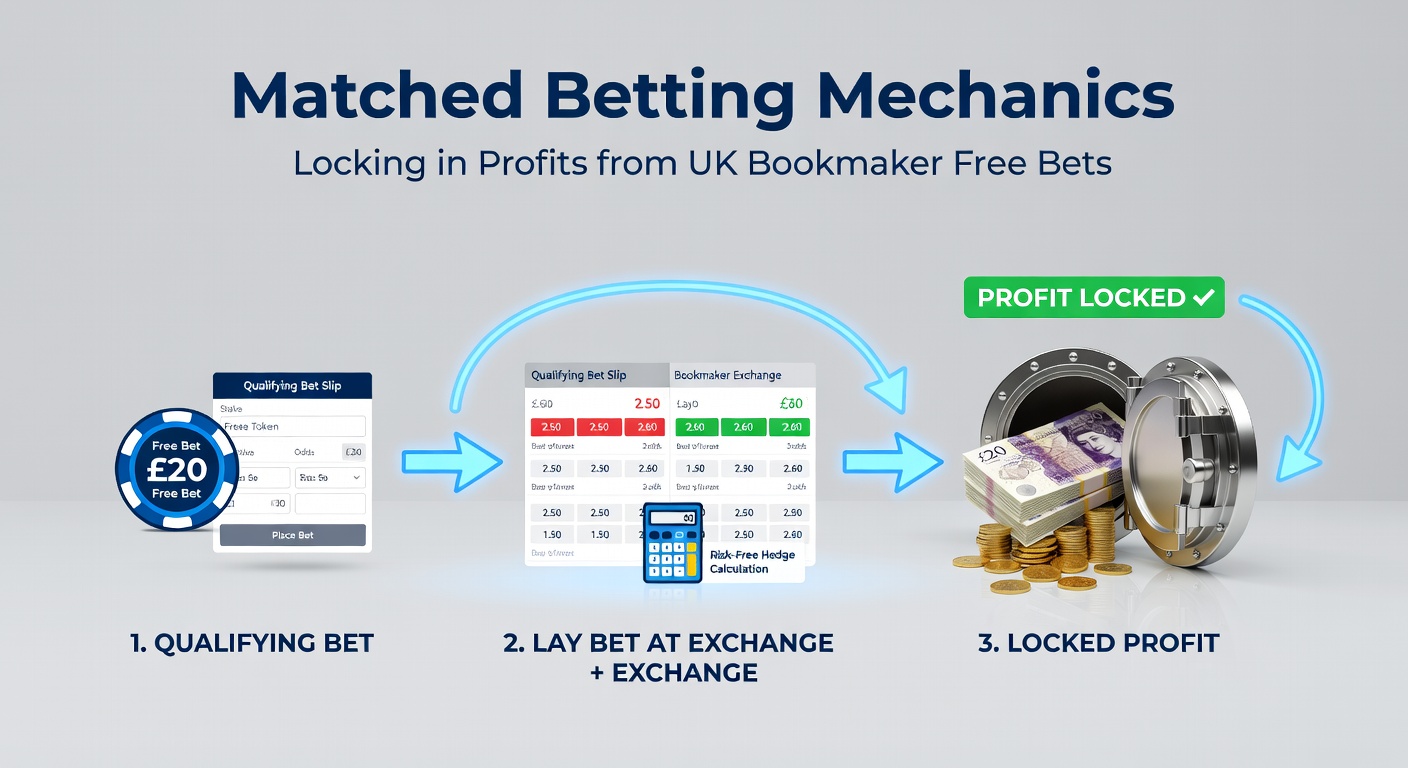
Matched Betting Mechanics: How UK Punters Lock in Profits from Bookie Free Bets
Matched betting has emerged as a methodical approach for UK bettors to extract guaranteed profits from bookmaker free bets, a strategy that relies on covering all possible outcomes of an event through opposing wagers; those who've mastered it often turn promotional offers into risk-free gains, sidestepping the uncertainties of traditional gambling.
The Foundations: Free Bets and Their Role in Promotions
UK bookmakers routinely launch free bet offers to attract new customers or reward loyalty, typically requiring a qualifying deposit and wager before unlocking the bonus; for instance, a common setup involves placing a £10 bet at minimum odds, after which the bookie credits a £10 free bet. Data from industry trackers reveals that in early 2026, such promotions proliferated across platforms like William Hill and Paddy Power, with over 50 active deals reported by March. What's interesting is how these free bets come with strings attached—non-withdrawable winnings, minimum odds thresholds, and expiration dates—yet matched betting neutralizes those limitations by mathematically balancing the stakes.
Observers note that free bets represent pure value since they allow wagers without risking personal funds; the key lies in pairing them with precise counter-bets, ensuring profits regardless of the event's result. And while bookies design these offers to encourage further play, savvy users exploit the mechanics without exposure to loss.
Back Bets Meet Lay Bets: The Core Pairing Strategy
At its heart, matched betting hinges on placing a "back" bet with a bookmaker—betting on an outcome to happen, say Manchester United to win—and simultaneously laying off that same outcome on a betting exchange like Betfair or Smarkets, where users bet against it occurring; this creates a hedged position that guarantees a small loss or break-even on the qualifying bet, qualifying for the free bet while minimizing outlay. Turns out, the slight discrepancy between back odds (often boosted by bookies) and lay odds (determined by exchange liquidity) introduces what's called "qualifying loss," but experts calculate it precisely to keep it under 1-2% of stake.
- Back bet: £50 on Team A at 2.0 odds with the bookie.
- Lay bet: £49.50 on Team A at 2.02 odds on the exchange (adjusted for commission).
Should Team A win, the back bet returns £100 minus the lay liability; if they lose, the lay bet profits offset the back stake. Either way, the net qualifies the free bet at negligible cost.
Betting Exchanges: The Essential Counterpart
Betting exchanges function as peer-to-peer markets where users act as human bookmakers, laying bets for others to back; platforms like Betfair dominate in the UK, handling billions in volume annually, while Smarkets offers lower 2% commission rates compared to Betfair's standard 5%. According to figures from the International Betting Integrity Association, exchange liquidity surged 15% year-over-year into March 2026, easing matched bets on niche markets. People who've tried this often discover that high-liquidity events like Premier League football minimize unmatched lays, keeping the process seamless.
But here's the thing: exchange commission eats into lay profits, so calculators factor it in automatically; for a £10 free bet at 2.0 odds, the eventual profit hovers around £8 after all adjustments, turning promotions into scalable income.
Step-by-Step: Executing a Qualifying Bet
Users start by selecting a suitable market with close back and lay odds—ideally within 102% of each other—then input stakes into free online matched betting calculators that spit out exact lay amounts; take one case where a punter backs Everton to win at 3.0 with Bet365 (£30 stake) and lays £29.10 at 3.05 on Smarkets, resulting in a £0.75 qualifying loss that unlocks a £30 free bet. Now, with the free bet in hand, the process repeats: back another outcome, say with Coral at 4.0, lay on the exchange, and pocket 75-80% of the free bet value as profit since only back winnings count, minus the lay.
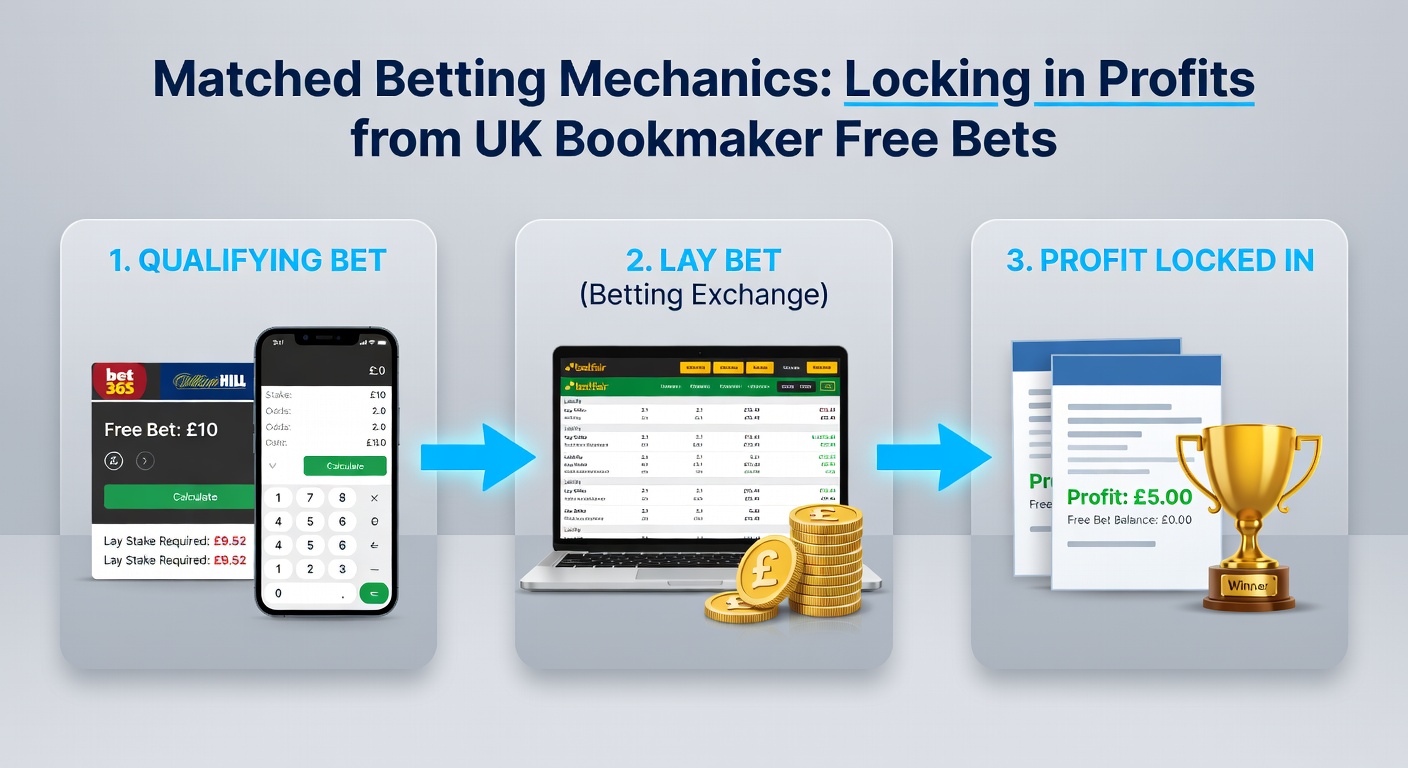
It's noteworthy that timing matters; bookies void bets on abandoned matches, but exchanges settle on official results, so cross-checking rules prevents glitches. And in March 2026, amid a flurry of Six Nations rugby free bets, users reported averaging £500 monthly from 20-30 qualifiers, per community-shared trackers.
Free Bet Extraction: Maximizing the Bonus
Once qualified, the free bet extraction mirrors the process but yields profit because stakes don't return on losses; backing £100 at 3.0 odds nets £200 winnings if successful (free bet stake voided), while the lay covers the alternative at a calculated £66.67 liability, leaving £66.67 profit minus commission. Research from Australian analysts, such as those at the Australian Gambling Research Centre, indicates matched betting's efficiency stems from this asymmetry, with global practitioners reporting 70-90% extraction rates on bonuses. That's where the rubber meets the road: repeat across multiple bookies, and small edges compound.
Advanced Tactics: Odds Boosts, Cashes, and Multiples
Beyond basics, punters layer in bookmaker extras like Best Odds Guaranteed (BOG) on horse racing—backing early at low odds, cashing out later at enhanced prices—or accumulator insurance, where refunds on losing multis become extractable via lays; one study highlighted how BOG alone boosted March 2026 profits by 20% for horse-focused matchers. Yet, gubbing—bookies limiting accounts—looms as a hurdle, prompting float management across 50+ sites and low-stake patterns to mimic recreational play.
Software like OddsMonkey or Team Profit automates oddsmatching, scanning 90+ bookies against exchanges in real-time; subscribers access daily lists, saving hours while ensuring 98%+ matchable events. Observers who've tracked this note that March 2026 saw integration of casino free spins too, with similar back-lay logic adapted for slots volatility.
Profit Projections and Real-World Yields
A typical newcomer clears £500-£1,000 from sign-up offers alone, scaling to £1,000+ monthly with reloads; data from user aggregates shows averages holding steady despite tighter terms, as bookies compete fiercely. Take this example: five £50 free bets extracted at 80p per pound yield £200 net, all without market risk. It's not rocket science—pure arbitrage dressed as betting—but requires discipline around bankroll (starting £200-500) and tax-free status under UK rules.
Navigating Pitfalls: Common Errors and Safeguards
Mistakes like unbacked lays or overlooked minimum odds erode edges, yet double-checking with calculators mitigates most; liquidity droughts on obscure sports demand patience, while payment delays from new accounts test resolve. Those who've studied patterns emphasize VPN avoidance—bookies detect it—and gradual staking to evade restrictions. In a landscape where promotions evolve weekly, staying updated via forums proves essential.
Conclusion
Matched betting stands as a precise system for converting UK bookmaker free bets into locked-in profits, blending back-lay mechanics, exchange liquidity, and promotional math to eliminate risk; as March 2026 promotions ramp up amid spring sports, the mechanics remain robust for those who follow the steps diligently. Experts observe that with tools and strategy, it offers consistent returns in a volatile industry, provided users respect the fine print and scale sustainably.