Fixture Congestion and Its Influence on Goal Patterns Across European Leagues
Written by Alex Koch · Jun 23, 2026
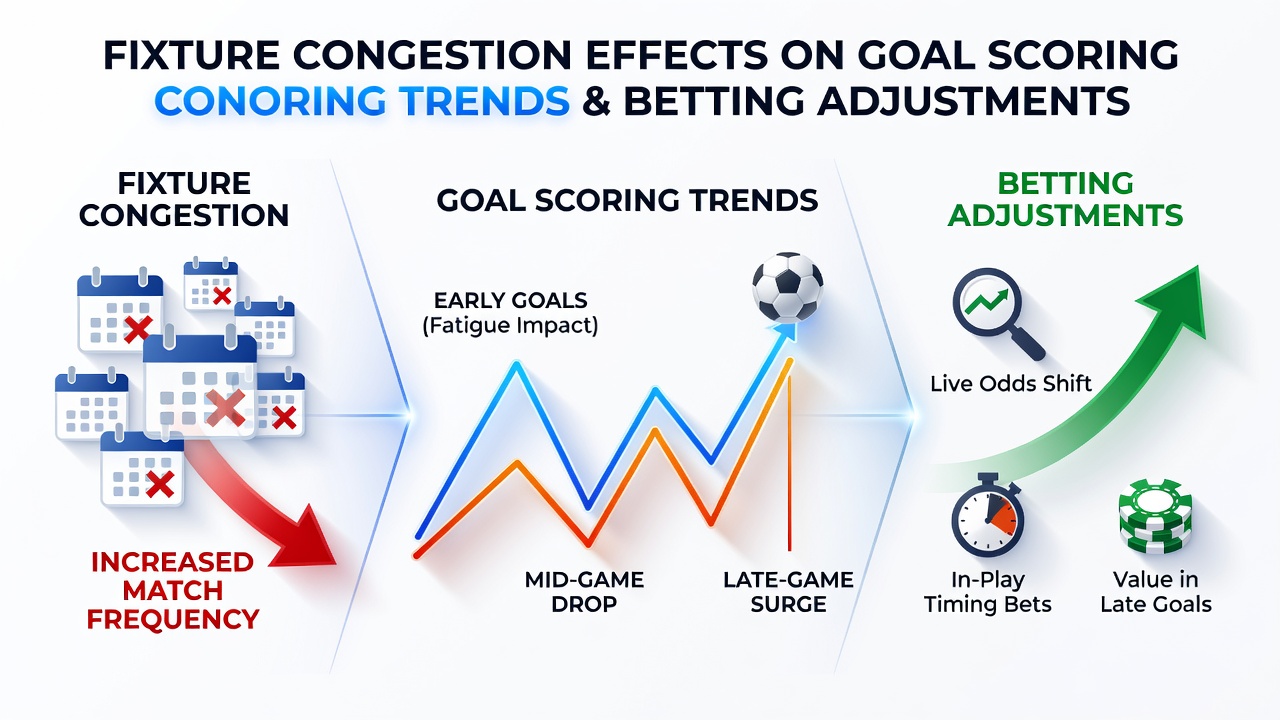
Fixture Congestion and Its Influence on Goal Patterns Across European Leagues
Fixture congestion arises when teams face multiple matches within short time frames, often due to domestic cups, European competitions, and international breaks that pile up over weeks. Researchers tracking league data across top divisions have noted consistent shifts in scoring rates during these periods, with average goals per game dropping as player workloads increase. Observers note that recovery time shrinks, leading to measurable changes in match outcomes that betting markets then reflect through adjusted odds and line movements.
Patterns in Goal Production During Overloaded Periods
Data from major European competitions shows that teams playing three or more matches in a fourteen-day window tend to see total goals fall by roughly eight to twelve percent compared to standard scheduling. This trend holds across the Premier League, Serie A, and Bundesliga seasons up through early 2026, where analysts compiled results from congested windows in December and March. Midfield control weakens under fatigue, while defensive organization holds longer, resulting in fewer clear chances and more low-scoring draws. Studies published in the Journal of Sports Sciences have documented these effects through metrics such as distance covered and high-intensity runs, which decline sharply after the second match in quick succession.
What's interesting emerges when examining specific player roles. Forwards and attacking midfielders register reduced shot volumes, while goalkeepers face fewer high-danger situations overall. Leagues with deeper squads experience smaller dips, yet even they show directional consistency toward under totals in betting markets. Figures from the 2025-26 campaign, including fixtures clustered around the winter period extending into June 2026 international windows, confirm the pattern repeats year after year without significant deviation.
Market Responses and Line Adjustments
Betting operators respond to these documented trends by tightening over/under lines and shifting moneyline prices toward draws or lower-scoring favorites. When schedules release weeks in advance, sharp bettors identify congested clusters early, prompting lines to move before public money arrives. This creates opportunities for value on unders in certain matchups, particularly when both sides feature thin benches or travel demands. Industry reports from the Canadian Gaming Association highlight how such adjustments occur across sportsbooks within hours of injury news or rotation announcements that signal further fatigue risks.
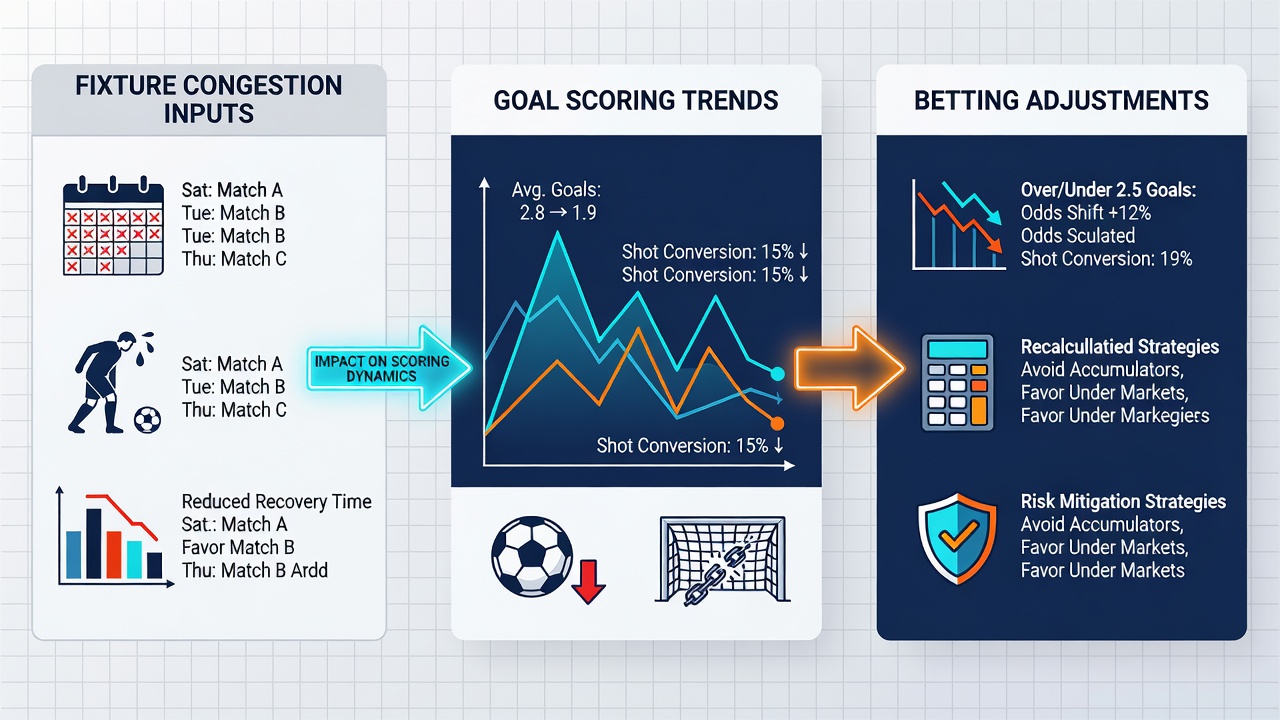
Live betting sees even quicker reactions once matches begin, with totals markets drifting lower as first-half statistics reveal slower tempo. Those who've studied this landscape know that early goal droughts often persist, allowing in-play traders to capitalize on momentum shifts. European Club Association tracking data indicates rotation policies from top clubs correlate directly with these market corrections, as managers prioritize squad preservation over attacking flair during packed stretches.
Case Examples From Recent Windows
Take the December 2025 period across the Bundesliga, where several clubs navigated league, cup, and Champions League fixtures within ten days. Total goals across affected matches averaged 2.4 per game versus a season mean of 3.1, prompting widespread under bets to hit at elevated rates. Similar clusters appeared in La Liga during spring 2026, where travel across time zones compounded recovery issues and produced parallel scoring declines. Bettors monitoring squad news adjusted stakes accordingly, favoring totals markets that had already incorporated the congestion premium into opening lines.
These examples illustrate how statistical models used by professional syndicates incorporate rest differentials and historical congestion data to project final scores more accurately than standard algorithms. Markets then price that information into spreads and player props, such as reduced anytime goalscorer odds for forwards logging heavy minutes.
Conclusion
Fixture congestion continues to shape goal trends through measurable physical and tactical effects, while betting markets adapt via rapid line adjustments that reflect emerging data. Observers tracking these dynamics across multiple seasons find the relationship between schedule density and scoring remains stable, providing consistent signals for those analyzing upcoming fixtures. As calendars grow more demanding into 2026 and beyond, the interplay between rest management and market pricing offers ongoing material for examination.