Deposit Framework's Effect on Accumulator Outcomes Across UK Bookmakers
Written by Taylor Jung · Jul 14, 2026

Deposit Framework's Effect on Accumulator Outcomes Across UK Bookmakers
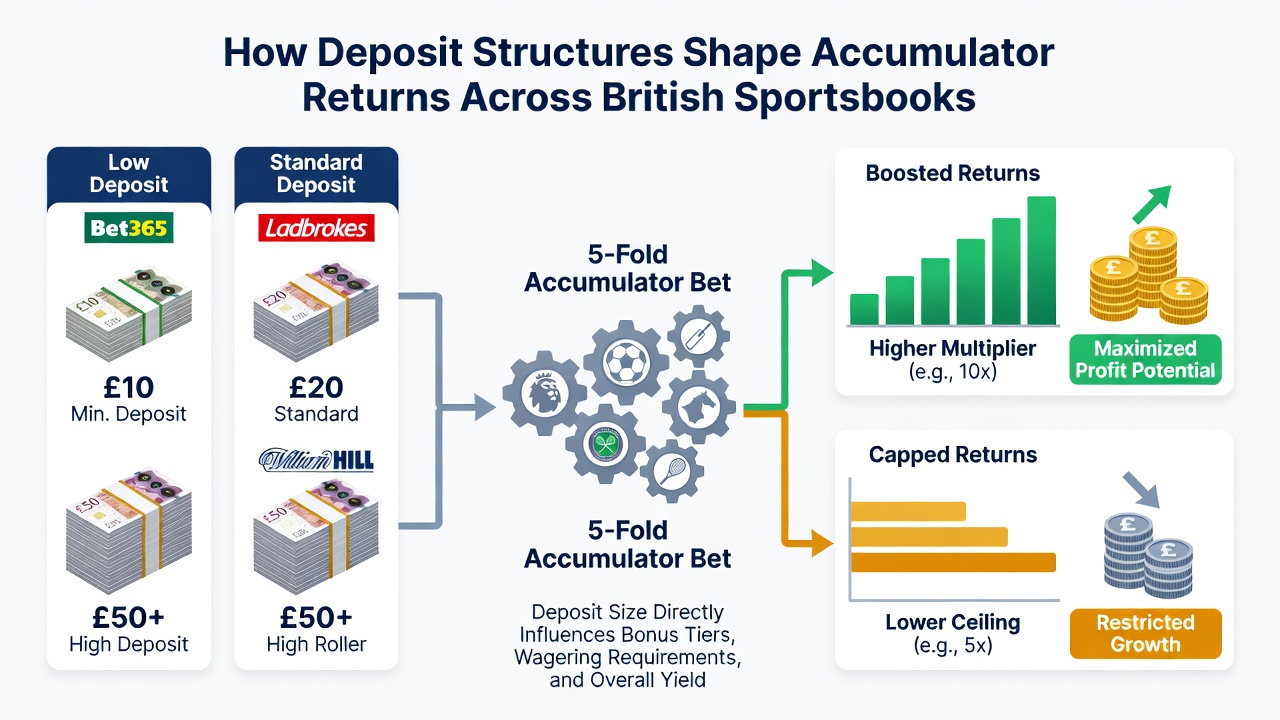
British sportsbooks structure deposit requirements in ways that directly influence accumulator returns, since minimum thresholds, payment method fees, and bonus eligibility criteria determine how much capital reaches the betting slip in the first place. Accumulators multiply odds across multiple selections, so even small differences in deposited amounts or processing costs compound across legs and alter final payouts. Observers note that bookmakers apply distinct rules for card deposits versus e-wallet or bank transfers, each carrying separate minimums and speed profiles that affect timing and total stake size available for multi-leg bets.
Common Deposit Methods and Their Built-In Parameters
Debit cards remain the most widespread option across major platforms, yet they often carry a £10 minimum deposit and immediate processing that lets users place accumulators without delay. E-wallets such as PayPal or Skrill impose their own floors, sometimes £5, while bank transfers demand higher amounts, frequently £50 or more, and introduce one-to-three-day clearing periods. Those longer waits matter for time-sensitive accumulator markets, particularly when football fixtures or tennis tournaments create narrow windows for price movement. Research indicates that users who rely on instant methods capture more favorable odds before lines shift, whereas delayed funding can result in missed opportunities or adjusted stake sizes.
Bonus Eligibility Tied to Deposit Type
Promotional offers frequently restrict bonus funds to specific deposit channels, which in turn shapes accumulator potential. A deposit bonus activated only through debit card may exclude e-wallet transactions, forcing users to choose between speed and extra balance. When that extra balance qualifies for accumulator boosts, the choice alters both stake and return calculations. Data shows that platforms running July 2026 campaigns tied card deposits to enhanced accumulator insurance produced measurable differences in payout distributions compared with periods lacking such incentives. Users who align their funding method with active promotions therefore position larger effective stakes on multi-leg bets without increasing personal outlay.
Fee Structures and Net Capital for Accumulators
Transaction fees rarely appear on the surface yet reduce net funds available for betting. Some e-wallet providers levy 1-2 percent charges on withdrawals, while certain cards trigger cash-advance fees when classified as gambling transactions. Although deposit fees themselves stay uncommon, the cumulative effect across repeated funding cycles matters for high-volume accumulator players. Figures reveal that consistent users who rotate between zero-fee bank transfers and instant wallets experience varying net capital each month, directly scaling the size of accumulators they can construct. Those variations become pronounced when odds multiply across five or six legs, turning a 1 percent funding difference into several percentage points of return disparity.
Real-World Patterns Observed in July 2026
During July 2026, several platforms adjusted deposit minimums upward for certain payment rails while introducing new instant-bank options through open banking protocols. Early reporting from industry analysts indicated that users switching to these new instant options placed larger accumulator stakes on average than those remaining with traditional cards. The shift coincided with major summer tournaments, where accumulator volume typically rises. Observers documented that bookmakers offering fee-free open banking deposits recorded higher proportions of five-leg and six-leg bets relative to prior months, suggesting that reduced friction in funding translated into more complex accumulator construction.
Strategic Deposit Sequencing for Accumulator Players
Experienced users often sequence deposits across multiple accounts to maximize bonus access while respecting each platform's rules. One documented approach involves funding an initial card deposit to unlock a matched bonus, then supplementing with e-wallet deposits for subsequent accumulators once the bonus terms are satisfied. This sequencing avoids breaching single-method restrictions yet requires careful tracking of wagering requirements attached to each bonus. Studies from academic centers such as the Responsible Gambling Council have examined how such layering affects overall spend patterns, though outcomes vary by individual discipline and platform enforcement. Another source, the European Gaming and Betting Association, tracks regional differences in deposit flexibility that influence accumulator participation rates across markets.
Conclusion
Deposit structures at British sportsbooks function as gatekeepers that determine both the size and timing of capital available for accumulator bets. Variations in minimums, fees, processing speed, and bonus eligibility create measurable differences in achievable returns, especially when odds multiply across multiple selections. Patterns observed through mid-2026 demonstrate that users who map their funding choices to current promotional conditions and platform rules position themselves to capture greater accumulator yields without increasing personal risk exposure. The relationship between deposit mechanics and multi-leg outcomes therefore remains a central factor in how returns materialize across the British betting market.