Accumulator Positions Strengthened by Odds Comparison and Layered Promotions
Written by Iris Long · Jul 19, 2026

Accumulator Positions Strengthened by Odds Comparison and Layered Promotions
Accumulator bets combine multiple selections into one wager where each outcome must succeed for the full payout to trigger, and this structure creates opportunities when bettors compare odds across operators while layering available promotions. Observers note that successful positioning often begins with systematic review of price differences rather than relying on a single source for all legs. In July 2026 industry data showed continued growth in multi-leg activity across several markets, with operators adjusting their promotional calendars to capture that volume.
Core Mechanics of Accumulator Construction
Each leg in an accumulator carries its own odds that multiply together to determine the overall return, so small variations in those individual prices compound significantly over four or more selections. Bettors who examine multiple platforms identify instances where one operator offers higher returns on a particular fixture while another provides better value on a different event. This cross-checking reduces the drag that lower odds would otherwise impose on the final multiplier. Those who study the process regularly report that maintaining spreadsheets or dedicated comparison tools helps track price movements across sessions without missing fleeting discrepancies.
Integrating Odds Comparison Into Daily Practice
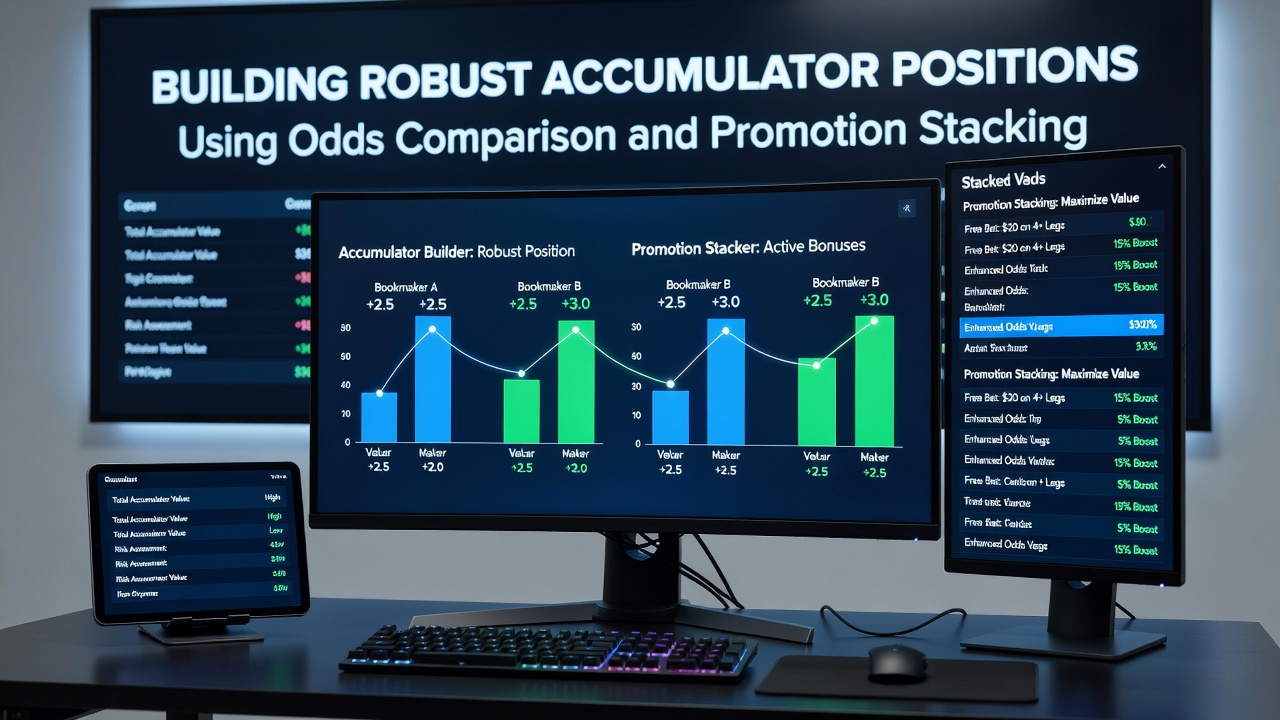
Odds comparison sites aggregate prices from numerous bookmakers and present them side by side, allowing quick identification of the strongest line for each selection. Researchers at academic institutions have examined how access to such aggregators influences bettor behavior, finding measurable shifts toward higher-value combinations when comparison becomes routine. During periods of high fixture density, such as midweek European football schedules, price gaps widen because operators update markets at different speeds. Bettors who refresh multiple tabs or use notification services catch these windows before lines converge. One documented approach involves locking in the best available price for each leg separately and then confirming that the combined stake still satisfies any minimum requirements attached to active promotions.
Promotion Stacking Layers and Their Rules
Operators frequently release accumulator-specific boosts, insurance refunds, or bonus payouts that activate once a minimum number of legs succeeds. These offers rarely combine without restrictions, yet careful sequencing allows several incentives to apply across different stages of the same bet. A typical pattern begins with an enhanced odds token on one leg, followed by a stake refund offer that triggers if the accumulator falls short by a single selection. Data from regulatory filings in various jurisdictions indicate that operators disclose stacking limits within terms, and users who review those clauses before placement avoid unintended disqualifications. In July 2026 several platforms introduced tiered boost structures that scaled rewards according to accumulator length, creating additional variables for comparison.
Practical Sequencing of Offers
Successful stacking often follows a deliberate order: first securing any no-deposit or low-stake entry offers, then applying price boosts to qualifying selections, and finally confirming eligibility for insurance or cashback layers. Industry reports from the Mississippi Gaming Commission highlight that clear disclosure of rollover conditions remains a compliance focus, and users benefit from verifying each step against those published rules. Observers note that combining a percentage boost on one bookmaker with an insurance product from another requires separate accounts and careful stake allocation so neither promotion voids the other through overlap clauses. This separation preserves access to both incentives while the accumulator itself remains intact.
Monitoring Market Movements and Timing
Accumulator prices fluctuate as new information reaches markets, and late adjustments can either improve or erode the overall multiplier. Those who maintain comparison routines watch for line movement after team news releases, allowing them to replace a leg whose odds have shortened unfavorably. Australian research compiled by the Australian Gambling Research Centre shows that bettors who refresh prices within set intervals capture more favorable combined returns than those who place selections once and leave them static. July 2026 schedules included concentrated international tournaments that generated rapid line shifts, rewarding users who maintained active comparison workflows throughout the day.
Record Keeping and Compliance Considerations
Accurate logs of each leg's source, stake, and attached promotion help resolve disputes if an operator applies an unexpected restriction. Regulatory frameworks in multiple regions require operators to honor published terms once a bet is accepted, yet users still benefit from screenshots and timestamped records. Experts emphasize that maintaining separate ledgers for each platform prevents confusion when promotions run concurrently. This documentation also supports tax reporting where jurisdictions treat winnings as taxable events.
Conclusion
Accumulator positioning improves when odds comparison becomes habitual and promotion layers are sequenced according to published rules. Systematic price checking across platforms, combined with attention to stacking conditions, produces more resilient structures that respond to market movements. Continued evolution of operator calendars through 2026 suggests these techniques will remain relevant as long as multi-leg activity continues to draw attention from both participants and regulators.